
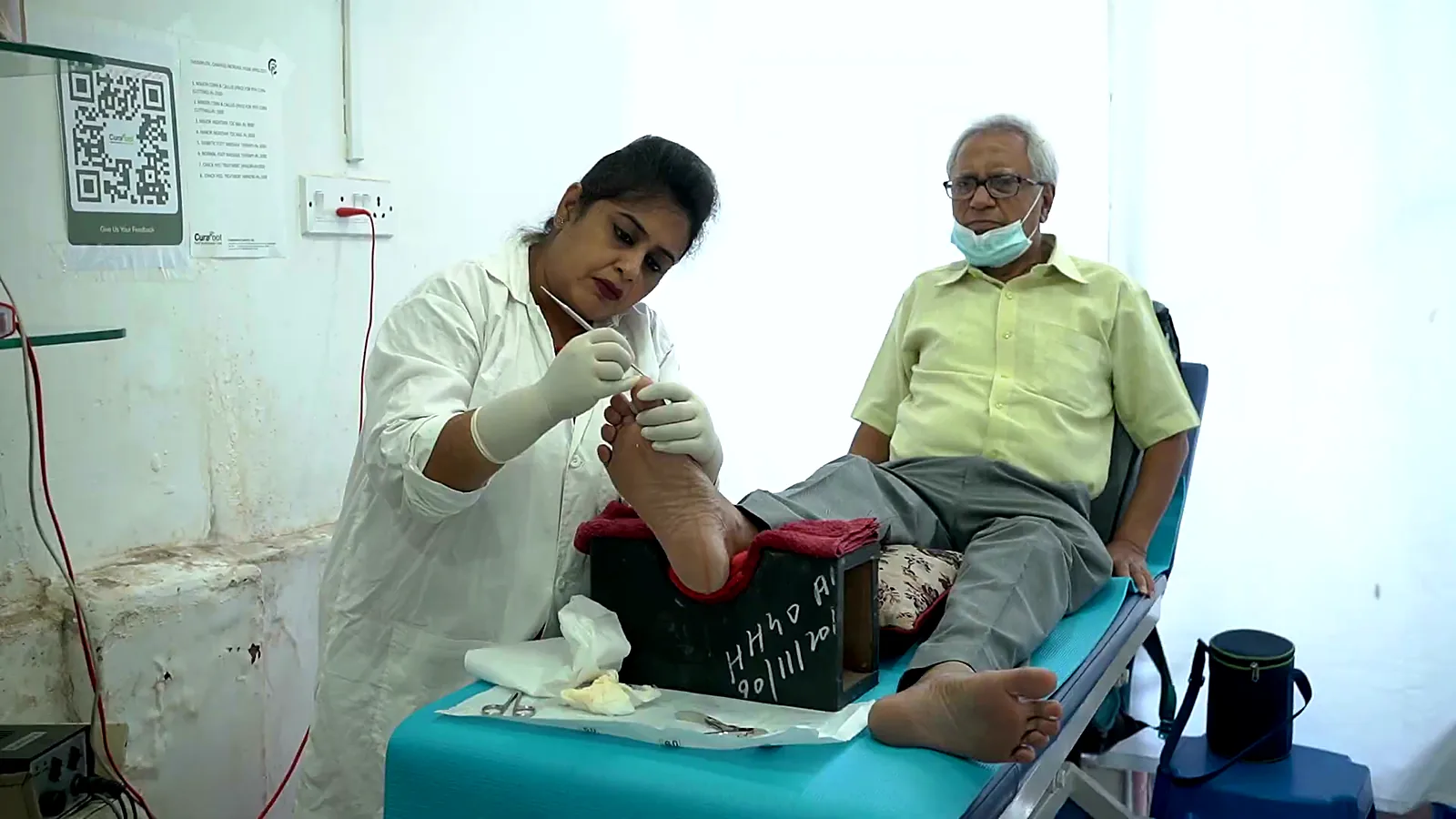
Diabetic foot symptoms that need a podiatrist today.
Nerve damage from diabetes can hide an injury until it is already infected. Don’t wait for it to hurt.
- A change in skin colour or shape: redness, paleness, swelling
- Numbness, tingling or burning in the feet
- A cut, blister or sore that isn’t healing
- Foot or leg pain and cramps, even at rest
- Thick or yellowing toenails, or hair loss on the feet
- Sores, or infected corns or calluses
- A foot that is hot, red or swollen, even without a wound
- A toe or patch of skin turning dark or black
Diabetes damages feet in two quiet ways.
Poor blood circulation
Less blood reaches the feet, so even a small cut heals slowly and can become an ulcer.
Nerve damage (neuropathy)
Feeling fades, so a cut, blister or pressure sore can go unnoticed until it is infected.
1 in 3people with diabetes may get a foot ulcer in their lifetimeNew England Journal of Medicine, 2017
6 in 100Indians with diabetes have a foot ulcer right nowInt. Journal of Diabetes in Developing Countries, 2025
84%of diabetes-related amputations start with a foot ulcerDiabetes Care, 1990
What happens at your diabetic foot check.
- 1AssessmentYour podiatrist checks your skin, nails, any wounds and the feeling in your feet, and asks about your diabetes and footwear.
- 2ScreeningTouch, temperature and vibration tests for nerve damage, and a check of the blood flow to your feet.
- 3Your planWound care and offloading where needed, plus custom insoles, diabetic footwear and advice to stop the next problem.

- Since 2017 treating feet in Kolkata
- Foot & ankle surgeon on our clinical team
- 3D scan and pressure mapping for every insole
- Six places to see us in Kolkata, Kharagpur, Bhubaneswar and Chirala
Who should have a diabetic foot check, and how to look after your feet at home.
Book a diabetic foot check
- Everyone with diabetes, at least once a year, even when the feet feel fine
- More often if you have numbness or tingling, poor circulation, a past ulcer or amputation, or a change in the shape of your foot
- Anyone with corns, calluses or thick nails they can’t safely care for themselves
- Straight away if you notice any of the symptoms listed at the top of this page
Daily diabetic foot care at home
- Look at your feet every day, including the soles and between the toes. Use a mirror, or ask someone to help.
- Wash them in warm, not hot, water and dry them well, especially between the toes. Moisturise dry skin, but not between the toes.
- Don’t walk barefoot, even at home, and check inside your shoes before you put them on.
- Don’t cut corns or calluses yourself. A podiatrist can remove them safely.
- Wear shoes that fit, with room for your toes. Ask us about diabetic footwear and insoles if your feet are numb or have changed shape.
- Keep your blood sugar in the range your doctor has set.
Diabetic foot treatment at the Clinic

Cleaning, dressing and taking pressure off wounds so they heal.

Nerve, circulation and pressure checks, with a written report.

Made from your 3D scan to spread pressure off risky spots.

Extra depth, soft linings and cushioned soles.

Nails, corns and hard skin cared for safely by a podiatrist.

Casts and walker boots that take weight off an ulcer so it can heal.
Why diabetic feet need different care.
| What | Without diabetes | With diabetes |
|---|---|---|
| A small cut or blister | Noticed, and heals normally | May go unnoticed, and heal slowly |
| Check-ups | When something hurts | Regularly, even without symptoms |
| Footwear | Ordinary shoes are usually fine | Diabetic footwear and insoles cut ulcer risk |
| Corns and calluses | A comfort problem | Can hide an ulcer; have them removed by a podiatrist |
Free guide: the CuraFoot diabetic foot handbook
Daily foot care for people with diabetes: what to check every day, the warning signs, footwear, and when to see a foot doctor.
Active, or back to sport after an injury? Our Sports Injury Foot Clinic looks after runners and players. Bringing a child? See Children’s Foot & Walking Clinic.
What people ask us about diabetic feet.
Something else? Call 062923 00396.
What is a diabetic foot?
It is the name for foot problems caused by diabetes. Nerve damage dulls the feeling in the feet and poor blood flow slows healing, so cuts, blisters and corns can turn into ulcers or infections, and the shape of the foot can change.
Why is foot care so important if you have diabetes?
Because a small injury you can’t feel can become an ulcer, and most diabetes-related amputations start with a foot ulcer. Many ulcers can be prevented with daily checks at home, the right footwear and regular foot checks by a podiatrist.
Who treats diabetic foot problems?
A podiatrist (foot doctor) checks and treats diabetic feet: wound care, nail and skin care, insoles and footwear. Our clinical team includes podiatrists and a foot and ankle surgeon. Keep seeing your diabetologist or physician for your blood sugar.
How often should someone with diabetes get a foot check?
At least once a year, even when nothing hurts, more often if a podiatrist advises it, and straight away if you notice a wound that isn’t healing, numbness, a colour change or pain.
What causes diabetic foot ulcers?
Two things together: poor blood circulation, which slows healing, and nerve damage, which hides cuts and pressure sores until they are infected.
Can a diabetic foot ulcer heal?
Many do, with regular wound care, good blood sugar control and the pressure taken off the ulcer. How long it takes depends on its size, the blood flow and any infection.
What is offloading?
Taking pressure off an ulcer so it can heal, with a cast, a walker boot, special insoles or footwear. An ulcer that takes your weight with every step heals slowly.
What is Charcot foot?
A rare complication of diabetic nerve damage in which the bones and joints of the foot weaken and can collapse, changing the foot’s shape. It often starts with a foot that is warm, red and swollen, sometimes without much pain. See a podiatrist quickly: treatment usually means keeping weight off the foot, for example in a cast or walker boot, and then protective footwear.
When is a diabetic foot problem an emergency?
Go to a hospital emergency department the same day if a foot or wound becomes red, hot and swollen, smells or leaks pus, a toe turns dark or black, or you have a fever with a foot wound. These can be signs of a serious infection.
Do I need a referral?
No. You can book directly. Patients referred by their diabetologist or physician are welcome too.
Is diabetic foot care covered by insurance?
It depends on your policy and whether the treatment counts as medically necessary. Our front desk can help with the documents for a claim.
Book an appointment
- A podiatrist, not a general check-up
- Screening and a plan in one visit
- We call you to confirm your time