


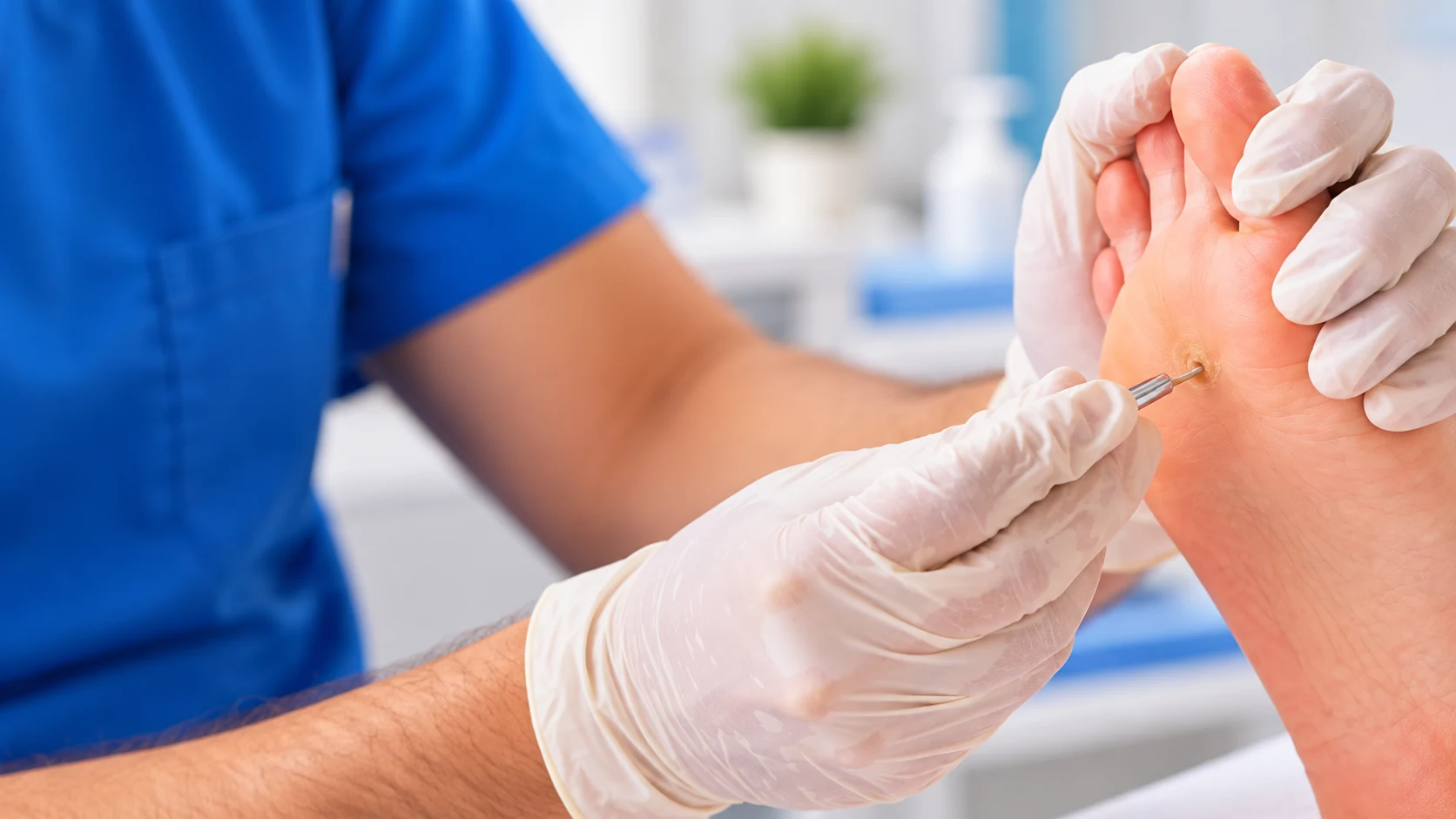
Foot Corn & Callus Treatment in Kolkata —Led by Podiatrist
Home remedies for corn wont help, but a podiatrist will surely help removing the corn — visit now, one time solution.
Clinical assessment · Corn and callus care · Personalised pressure-relief advice
Why Creams and Home Remedies Aren't Enough
Many believe that applying salicylic acid, a pumice stone or a corn cream helps remove corns & calluses—but the reality is they don't even touch the root cause. The most common reason for corns forming is because of the pressure point in the gait, footwear or a toe alignment. If you treat the surface only, it will come back again soon. A proper corn treatment begins with finding why the pressure keeps building up, not just filling it down.
Book a foot assessment →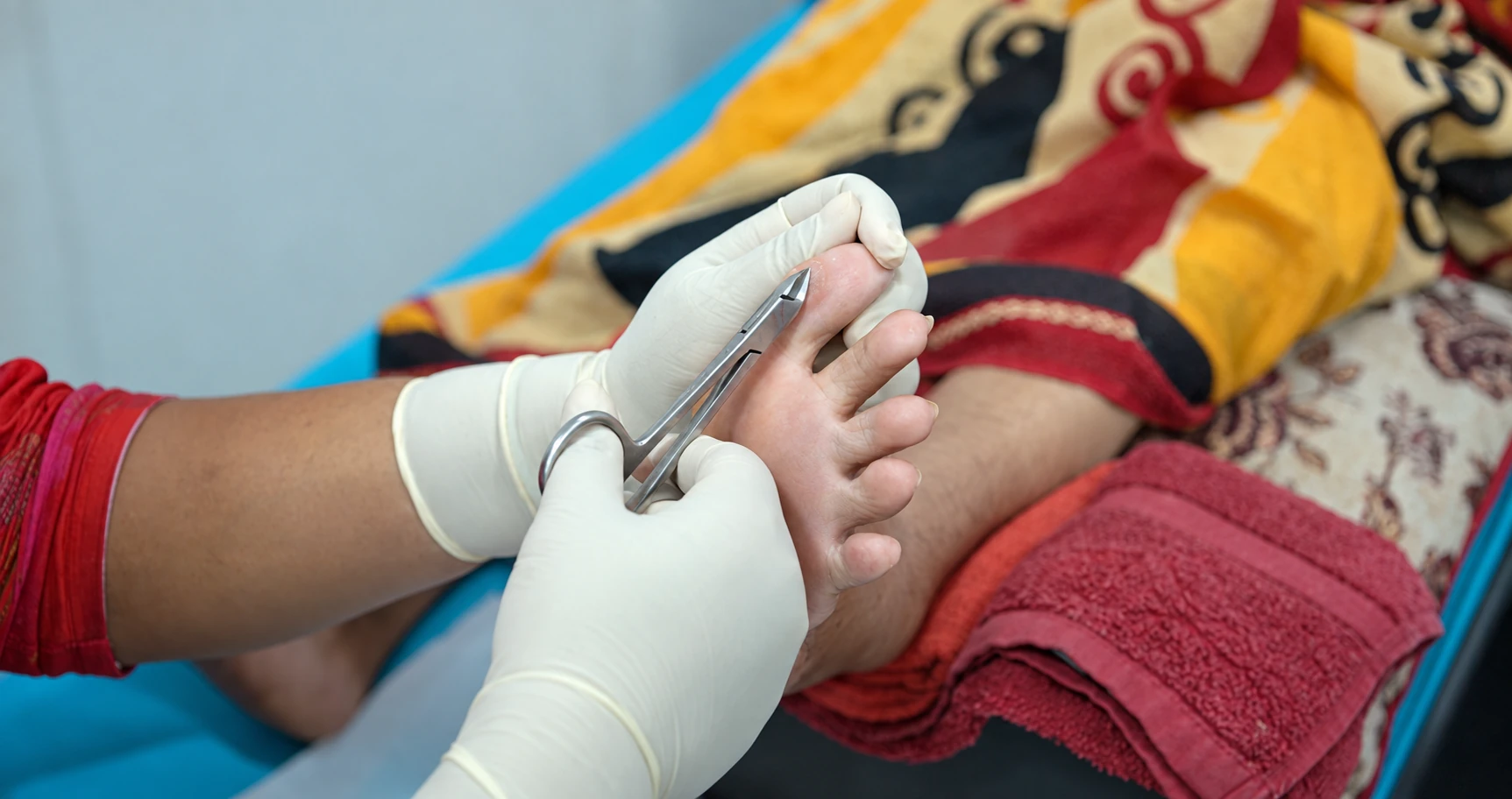
Foot Corn Treatment in Kolkata — What Happens in a CuraFoot Clinic
A focused clinical visit to assess the cause, treat the affected skin and help reduce recurring pressure.
Assessment
Your podiatrist examines the corn or callus, checks your gait and footwear, and identifies the pressure point causing it.
Painless removal
The thickened, dead skin is carefully pared away using a sterile podiatric technique. You'll feel pressure, not pain.
Insole & prevention advice
Custom offloading insoles or footwear guidance help redistribute pressure so the corn is less likely to return.
Your Corn & Callus Specialist in Kolkata

Dr. Kushal Nag
Consulting Orthopedic Surgeon · Foot & Ankle Specialist
Dr. Nag specialises in the assessment and treatment of foot and ankle conditions, including problems caused by repeated pressure, altered gait and foot structure.
View Doctor Profile →Corn vs Callus — Know the Difference
| Difference | Corn | Callus |
|---|---|---|
| Location | Toes, between toes, top of foot | Sole, heel, ball of foot |
| Size & shape | Small, well-defined, hard core | Broad, diffuse patch |
| Pain on pressure | Often sharp and localised | Usually mild or none |
| Hard vs soft corn | Hard corn: dry, firm skin. Soft corn: whitish and found between toes. | — |
| When it is serious | Sudden pain, discolouration, discharge, or a corn in a diabetic foot — seek care promptly rather than self-treating. | |
How to remove Corn from foot: Doctor's advice
Still unsure? Call +91 62923 00396 and our team will explain the procedure over the phone.
What Our Patients Say
“Great experience! Dr. Kushal Nag was amazing and very reassuring. The person who did my corn removal was excellent as well, very gentle, professional, and had a great behaviour. The whole process was smooth and comfortable. Thank you for the great care, Ms. Ushoshi!”
Frequently Asked Questions
Is corn removal painful?
No. CuraFoot uses a podiatric technique that removes thickened dead skin. Most patients feel pressure rather than pain and can walk comfortably afterwards.
How long does treatment take?
A typical visit takes 30–45 minutes, including assessment, removal, and insole or prevention advice.
Will the corn come back?
Corns and calluses often return if the underlying pressure is not addressed. A podiatrist assessment and suitable offloading can help reduce recurrence.
What is the difference between a corn and a callus?
A corn is small and concentrated with a hard core, usually on the toes. A callus is broader and commonly occurs on the sole or heel.
Is it covered by insurance?
Coverage depends on your individual policy and whether the treatment is classified as medically necessary.
Do I need a referral?
No referral is required. You can book directly for corn and callus treatment at CuraFoot.
