Custom insoles (also called orthotics or orthotic insoles) are shaped to your own feet. They support the arch, cushion the heel and move pressure away from sore spots, which can ease arch pain, heel pain and ball-of-foot pain and make walking and running more comfortable. At CuraFoot, a foot doctor checks your feet first, then an orthotist scans them in 3D and designs the insoles, which are 3D printed and finished by CuraFoot. Book a foot check to see whether custom insoles are right for you.
How it works

Consult a CuraFoot doctor
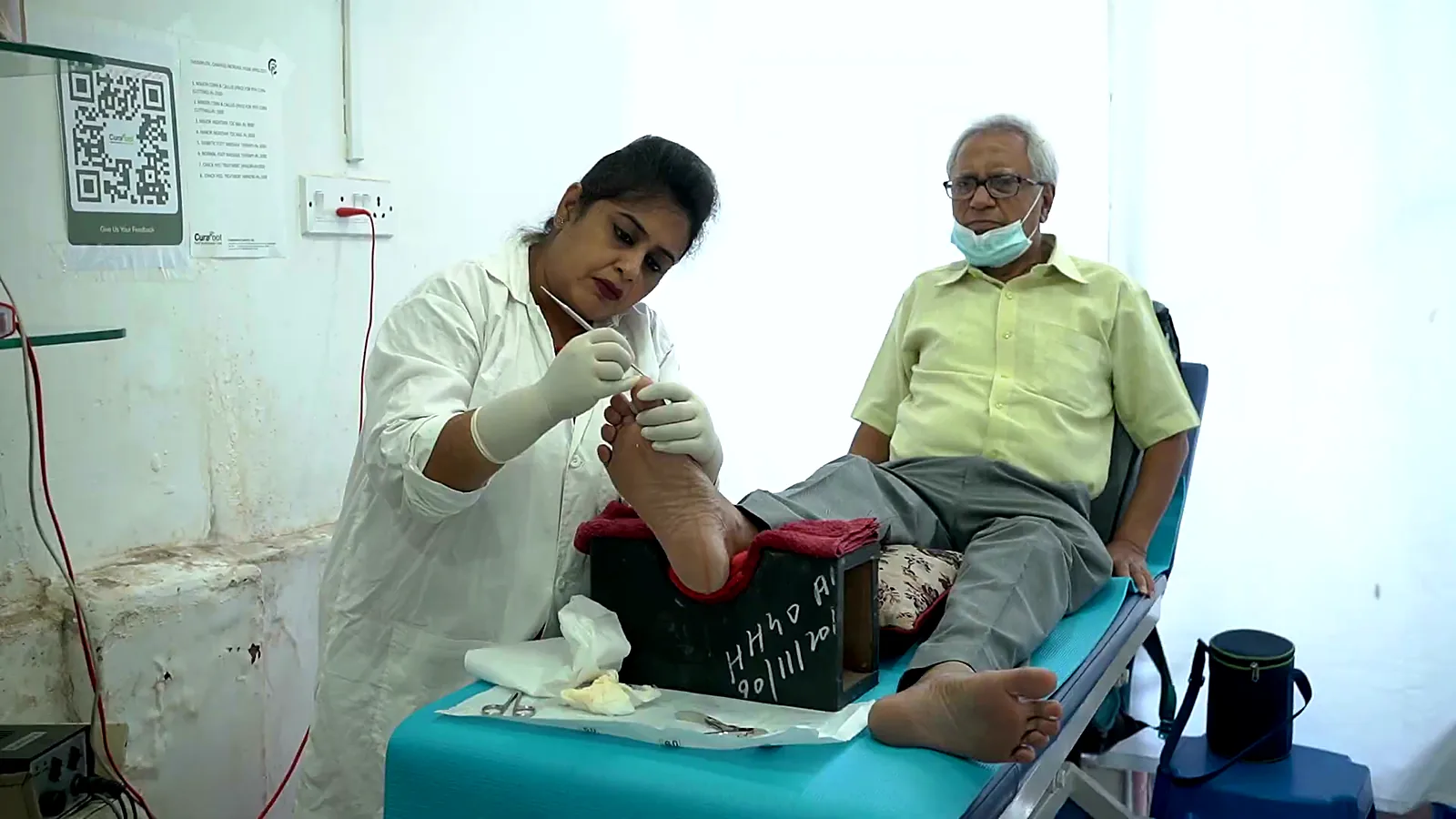
Our clinicians diagnose your foot problem and advise you on the right support.

3D foot scan
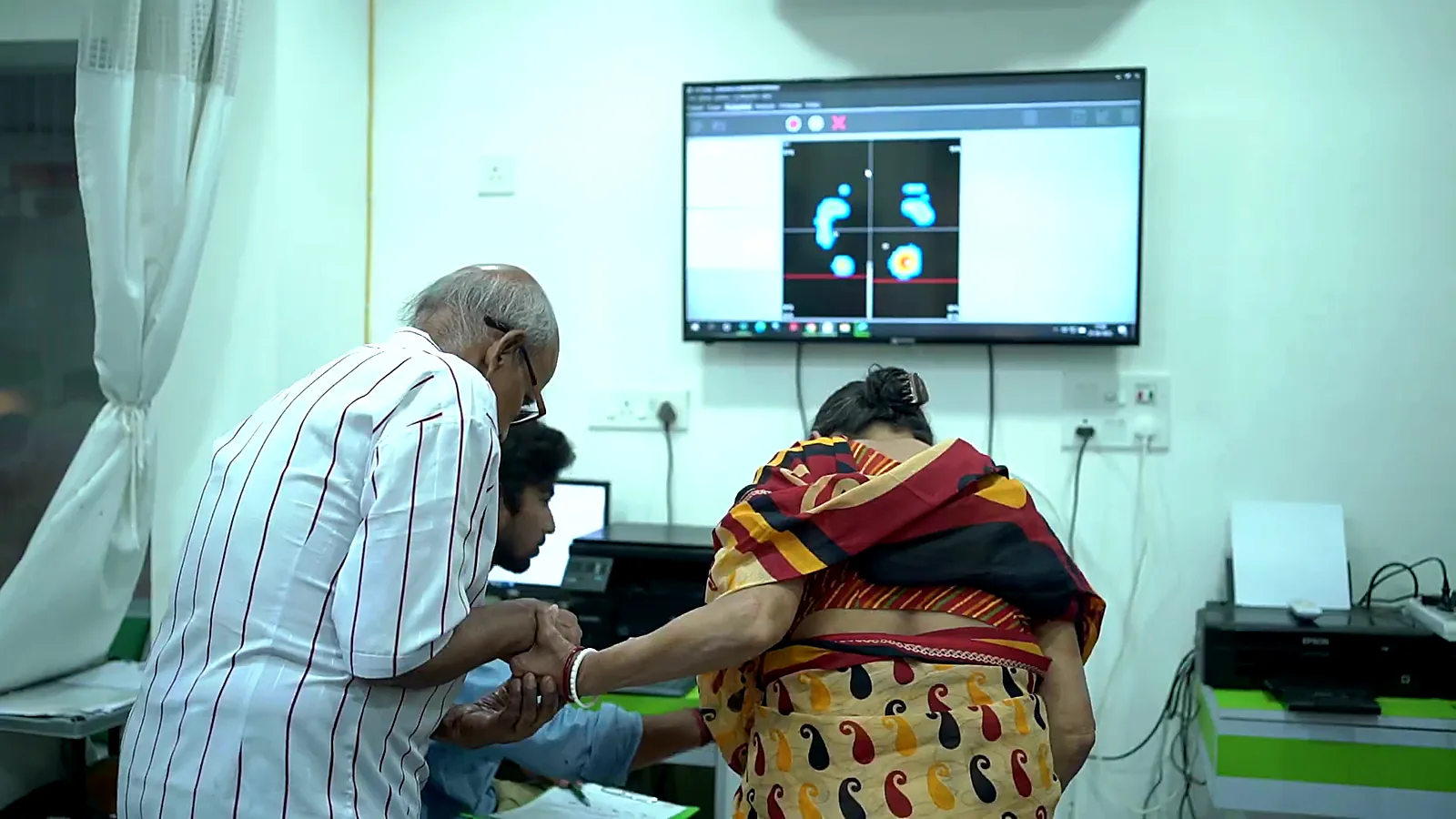
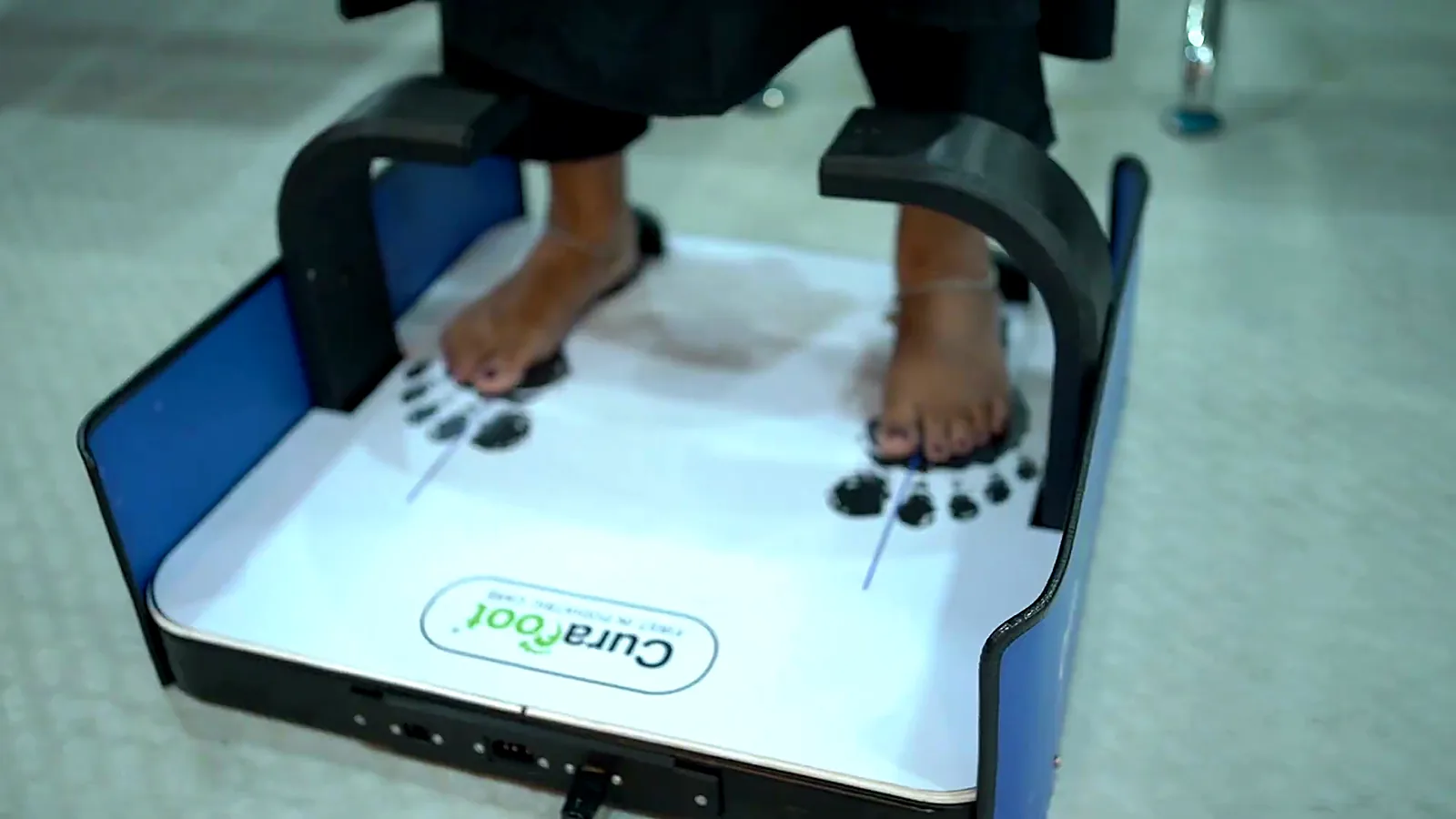
Our 3D scanning platform records detailed data for each of your feet.

3D design
Each foot is modelled with the medical corrections it needs.

Made for you
Your insoles are 3D printed to match your foot structure and needs.
The corrections we design
- Arch raise
- Medial and lateral wedges
- Deep heel cup
- Heel raise
- Rigid-flexible nylon, 3D printed on HP printers
Our software uses photos and scans to measure each foot and suggests the corrections it needs. Our clinicians check every design and decide.


Insoles for different foot problems


Since 2017 treating feet in Kolkata · Foot & ankle surgeon on our clinical team · 3D scan and pressure mapping for every insole · Six places to see us in Kolkata, Kharagpur, Bhubaneswar and Chirala
Custom insoles in Kolkata, Kharagpur and Bhubaneswar
You can start at any CuraFoot clinic. In Kolkata, CuraFoot Ajoy Nagar, near Ajoy Nagar crossing in Santoshpur, has the 3D foot scanner, and people come to it from Santoshpur, Survey Park, Jadavpur, Kasba, Garia, Patuli and along the EM Bypass. Our desk inside Apollo Gleneagles Hospital, off the EM Bypass, sees patients from Phool Bagan, Kankurgachi, Salt Lake and Beleghata.
Outside Kolkata, see us at Chennai Diabetes Centre in Chota Tengra, Kharagpur, or at DAshthetix in Patia, Bhubaneswar, where we also do 3D foot scans. The foot doctor or orthotist will tell you where your feet are scanned and when your insoles will be ready.
Find your nearest clinic or book a foot check.
Who makes your insoles
Your insoles are designed by CuraFoot’s orthotists, including Vicky Dey, our lead orthotist, and Debabrata Rout, a clinical prosthetist and orthotist. A foot doctor checks the diagnosis before any insole is made.
Buying insoles
Shop on curafoot.in, or in the clinic after talking to the foot doctor or the orthotist.
Ready-made insoles suit many people with mild aches. If you have pain that keeps coming back, flat feet, diabetes or a foot shape that ready-made insoles do not fit, see the foot doctor first.
CuraFoot 3D Printed Insoles
CuraFoot makes 3D printed custom insoles to fit your feet. Custom insoles help support body alignment, reduce ankle pain, ease foot fatigue, and make it more comfortable to run, jog or walk for long periods.
CuraFoot custom insoles are medical orthotics designed for one person’s feet. Each pair can include a deep heel cup, metatarsal support, extra cushioning and corrections to control over-pronation (feet rolling inwards).
CuraFoot’s 3D foot scanning records detailed data for each foot. That information is used to model each foot and work out the foot structure and the medical corrections it needs. A 3D design is then made so that the custom insoles match the person’s foot structure and needs.
CuraFoot 3D insoles are designed for you, based on your foot condition. They suit many people, from runners and recreational walkers to office workers and people with diabetes, and include:
- Custom Arch Support
- Shock absorbing Heel Cushion
- Left & right foot independent fit
- Contours to offload peak pressures
- Lightweight material
- Improved stability
- Hard-wearing
- Multiple top-layer options
- Personalised with your name
How do custom insoles benefit us?
Custom insoles, or orthotics, realign the feet and ankles and help the foot work as it should. They help many people, from runners and walkers to office workers and people with diabetes.
Custom insoles also spread weight more evenly, taking pressure off sore spots such as the heels and the ball of the foot. They absorb shock, support the arch, and support the feet, ankles, knees, back and spine.
Custom insoles and orthotics: your questions
Where can I get custom insoles near me in Kolkata?
At CuraFoot Ajoy Nagar, near Santoshpur, where we have the 3D foot scanner. You can also start at our desk in Apollo Gleneagles Hospital, or at our clinics in Kharagpur and in Patia, Bhubaneswar. See all clinics.
How are custom insoles made at CuraFoot?
A foot doctor examines your feet and asks how you walk, work and exercise. Your feet are scanned in 3D, and we may check how you walk and where the pressure falls. An orthotist designs each insole on screen with the corrections your feet need. The insoles are 3D printed and finished, then fitted in your shoes at the clinic.
What are custom insoles, and who needs them?
Custom insoles, or custom-made orthotics, are inserts placed inside the shoe to support the foot’s natural structure. Our feet are the base for the whole skeleton, so a badly aligned foot can affect the lower back, hips, knees and legs.
Custom orthotics help realign the foot to a relaxed, neutral position to relieve foot, leg and back stress. They can also help balance, ease foot fatigue and prevent many foot problems.
At CuraFoot, our clinicians diagnose, treat and advise patients on a range of foot problems, and make custom orthotics from a scan of each of your feet.
Do custom insoles help flat feet?
Yes. Custom insoles support the foot and help realign the foot joints while standing, walking or running. People with flat feet, high arches or supinated feet can benefit from custom insoles, as can people who play sports or exercise.
The right footwear matters too. Wearing the wrong shoes can lead to long-term foot, heel or ankle pain. Custom insoles reduce the pressure, pinching and rubbing that lead to bunions, blisters and heel pain, and can ease other foot conditions such as hammer toes, arch strain or overlapping toes.
How long do custom insoles take to get used to, and how long do they last?
Most people wear them for an hour or two on the first day and add time each day, for one to two weeks. Some aching in a new place during that time is common. Pain that gets worse is not, so tell us. With daily use, the shell lasts a long time; the top cover wears first and can be replaced. Come back for a check if your pain returns or your feet change.
Can I wear custom insoles with diabetes, or for heel pain?
Yes, they are often part of treatment for both. For diabetic feet they spread pressure to protect the skin, and the foot doctor checks for ulcer risk first (diabetic foot care). For heel pain and plantar fasciitis they cushion and offload the heel, alongside stretches and footwear changes.
Will custom insoles fit in my shoes?
They fit most closed shoes with a removable insole, such as trainers and many office shoes. Slimmer versions can be made for tighter shoes, and orthopaedic slippers for use at home. Bring the shoes you wear most to your appointment.
What are orthotics?

Custom orthotics (also known as orthotic insoles, shoe inserts or orthoses) are devices placed inside shoes to help the foot work as it should. Many common complaints, such as back, knee and hip pain, can be linked to poor foot biomechanics.
Biomechanics studies how the body moves during walking, running and sport. The most common foot biomechanics problem is over-pronation: the arches drop and the feet and ankles roll inwards.
Orthotic insoles correct over-pronation and realign the foot and ankle to a neutral position. This can reduce foot and ankle problems and, in many cases, ease knee, hip and lower back pain.
Why do we need orthotics?
Many people over-pronate to some degree, partly because of the hard, flat surfaces we walk on every day. Age, weak ankles and extra body weight also contribute.
Over-pronation does not cause problems for everyone, but it can lead to ankle pain, heel spurs, plantar fasciitis and metatarsalgia if it is not treated.
Orthotics correct over-pronation and can help reduce many common aches and pains, and help prevent lower body problems.
Are custom insoles better than ready-made insoles?
They do a different job. Regular insoles are designed for cushioning and shock absorption. They may feel comfortable at first, but they do not correct a biomechanical problem such as over-pronation.
Orthotics are a functional device, designed to correct how the foot works.
How do orthotics work?
Orthotics do more than support the arches. They realign the feet and ankles and help the foot work as it should. They also spread weight more evenly, taking pressure off sore spots such as the heels, the ball of the foot, corns between the toes and bunions.
They absorb some shock, but that is not their main purpose. The main purpose of an orthotic insole is to improve how the foot works, which in many cases reduces pain and helps prevent problems and injuries later.