
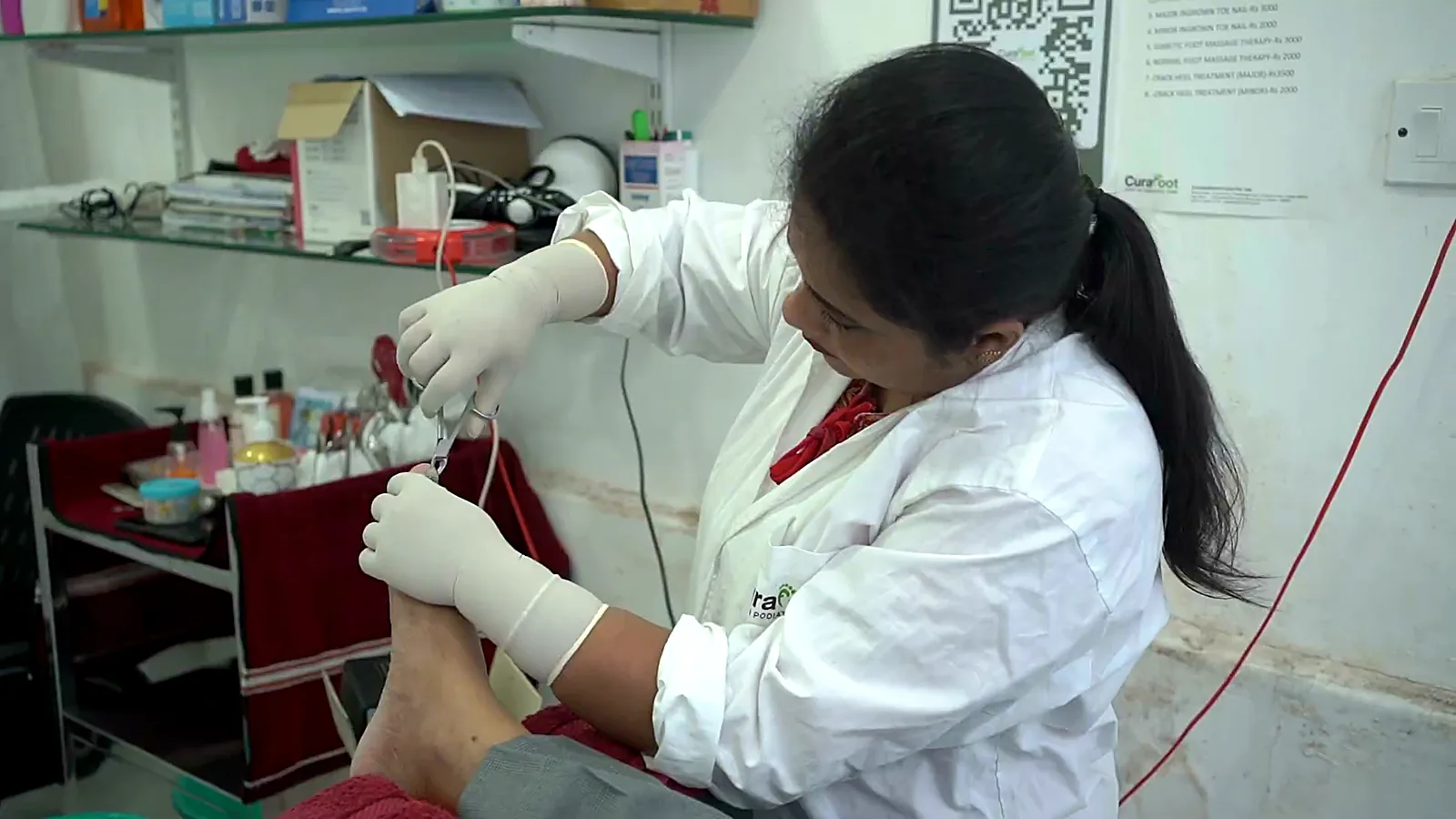
Foot ulcer and wound warning signs: see a podiatrist today.
A foot wound that is slow to heal needs more than a plaster. Don’t wait for it to hurt.
- A cut, blister or sore on the foot that has not improved in a few days
- Any wound on the foot if you have diabetes, even if it does not hurt
- A sore under a corn or callus, or a callus with blood or fluid under it
- Redness, swelling or warmth around a wound
- Pus, fluid or a bad smell from a wound
- Black or blue skin on a toe or the foot
Why a foot wound won’t heal.
Pressure with every step
Walking on a wound presses on it again and again. Until the pressure is taken off, it struggles to close.
Poor blood flow and nerve damage
Diabetes can reduce the blood reaching the feet and dull their feeling, so wounds heal slowly and a sore can grow before you notice it.
What happens at your wound care visit.
- 1AssessmentThe wound is measured and examined, and the feeling and circulation in your feet are checked.
- 2Cleaning and dressingDead tissue is removed and a suitable dressing applied. You are told how often to come back for dressing changes.
- 3Taking the pressure offA cast, walker boot or special footwear keeps weight off the wound while it heals.
Wound care is at our Ajoy Nagar clinic in Kolkata. Address, hours and directions.

- Since 2017 treating feet in Kolkata
- Foot & ankle surgeon on our clinical team
- Wound care at our Ajoy Nagar clinic
- Podiatrists, not a general dressing room
When to go to hospital, and how to care for the wound between visits.
Some foot infections spread fast and need hospital treatment, often with antibiotics through a drip. We will tell you if we think you need to go, but don’t wait for an appointment if you notice these signs.
Go to a hospital emergency department today if
- Redness or swelling that is spreading quickly
- A fever, chills or feeling unwell with a foot wound
- A wound that smells bad or leaks pus
- A toe or patch of skin turning dark or black
- Severe pain in a foot that was numb before
Between visits: caring for the wound at home
- Keep the dressing clean and dry, and change it only as your podiatrist advises.
- Keep weight off the foot: wear the cast, boot or footwear you were given every time you stand or walk.
- Look at the foot every day, and call us if the wound looks bigger, redder or wetter.
- Don’t put creams, powders or home remedies on the wound unless your podiatrist says so.
- Keep your blood sugar in the range your doctor has set.
Foot ulcer treatment at CuraFoot
Our wound care includes wound cleaning and removal of dead tissue (debridement), dressings, casts and walker boots that take the pressure off, and plaster and stitch removal, with checks of feeling and circulation and advice on blood sugar, footwear and daily foot checks.

Dead and hard skin removed so the wound can heal.

A dressing chosen for the wound, changed on a plan.

Casts and walker boots that take weight off an ulcer.

Nerve, circulation and pressure checks, with a written report.

Made from your 3D scan to keep pressure off healed skin.

Extra depth, soft linings and cushioned soles.
Living with diabetes? Our Diabetic Foot Clinic looks after the whole foot, from yearly checks to footwear. Read more: foot ulcers and preventing diabetic foot ulcers.
Why a foot wound with diabetes needs different care.
| What | A small cut, most people | A foot wound with diabetes |
|---|---|---|
| Healing | Usually heals in days | Can take weeks or months |
| Feeling | It hurts, so you protect it | May not hurt, so you keep walking on it |
| Infection | Uncommon | More likely, and can spread fast |
| Care | A clean plaster at home | A podiatrist: cleaning, dressing and offloading |
What people ask us about foot ulcers and wounds.
Something else? Call 062923 00396.
What is a diabetic foot ulcer?
An open sore on the foot of a person with diabetes, most often on the sole, the toes or the ball of the foot. It usually starts from a small injury, a blister or pressure under a callus that goes unnoticed because the feet have lost some feeling.
Why do people with diabetes get foot ulcers?
Two things together: nerve damage, which hides cuts and pressure sores, and poor blood flow, which slows healing. Tight shoes, walking barefoot and corns or calluses add pressure on the same spots.
How do I know if a foot wound is infected?
Redness, warmth or swelling around it, pus or fluid, a bad smell, or new pain. With diabetes the signs can be milder than you expect, so have any change checked the same day. A fever or spreading redness needs a hospital.
What is the best dressing for a diabetic foot ulcer?
There is no single best dressing. The right one depends on the wound’s size, depth, how wet it is and whether it is infected, and it changes as the wound heals. Your podiatrist chooses it and shows you how to keep it clean.
How do you heal a diabetic foot ulcer?
By cleaning it and removing dead tissue, dressing it, keeping weight off it, treating any infection and keeping blood sugar under control. Leaving out any one of these, especially the offloading, slows healing.
How long does a foot ulcer take to heal?
It depends on its size, the blood flow in the foot and any infection. Small ulcers that are offloaded well often heal in weeks; larger or infected ones can take months. Your podiatrist will review progress at each visit.
What is debridement?
Removing dead, hard or infected tissue from a wound, and the callus around it, so healthy tissue can grow. It is done in the clinic by a podiatrist and is usually repeated at follow-up visits.
Why do I need a cast or walker boot?
Walking on an ulcer presses on it with every step and stops it healing. A cast or walker boot moves your weight away from the wound.
How often do I need to come in?
It depends on the wound. At first, dressings often need changing and checking every few days. The clinic will give you a plan.
Can a foot ulcer come back after it heals?
Yes, it can, because the causes are still there. Custom insoles, the right footwear, daily foot checks and regular visits to a podiatrist help stop it coming back.
Which clinic does wound care?
Wound care is at our Ajoy Nagar clinic in Kolkata. Call 062923 00396 before you come, so the team can make time for your dressing.
Do I need a referral?
No. You can book directly. Patients referred by their diabetologist, physician or surgeon are welcome too.
Book an appointment
- A podiatrist, not a general dressing room
- Cleaning, dressing and offloading in one visit
- We call you to confirm your time